
Writing Emotion on the Page
From heart to hand

Characters’ emotions are often hard for me, while plot is easy.

Plot-driven novels aren’t bad—there are quite a few wildly successful, plot-driven thrillers, The Da Vinci Code by Dan Brown for one.1
But. The books I love tend to be character-driven.2 So when I didn’t have an answer when an agent asked why my MC did what she did—I knew it was time for me to to be [more] mindful about character-arcs.
Three things I did that brought the magic …
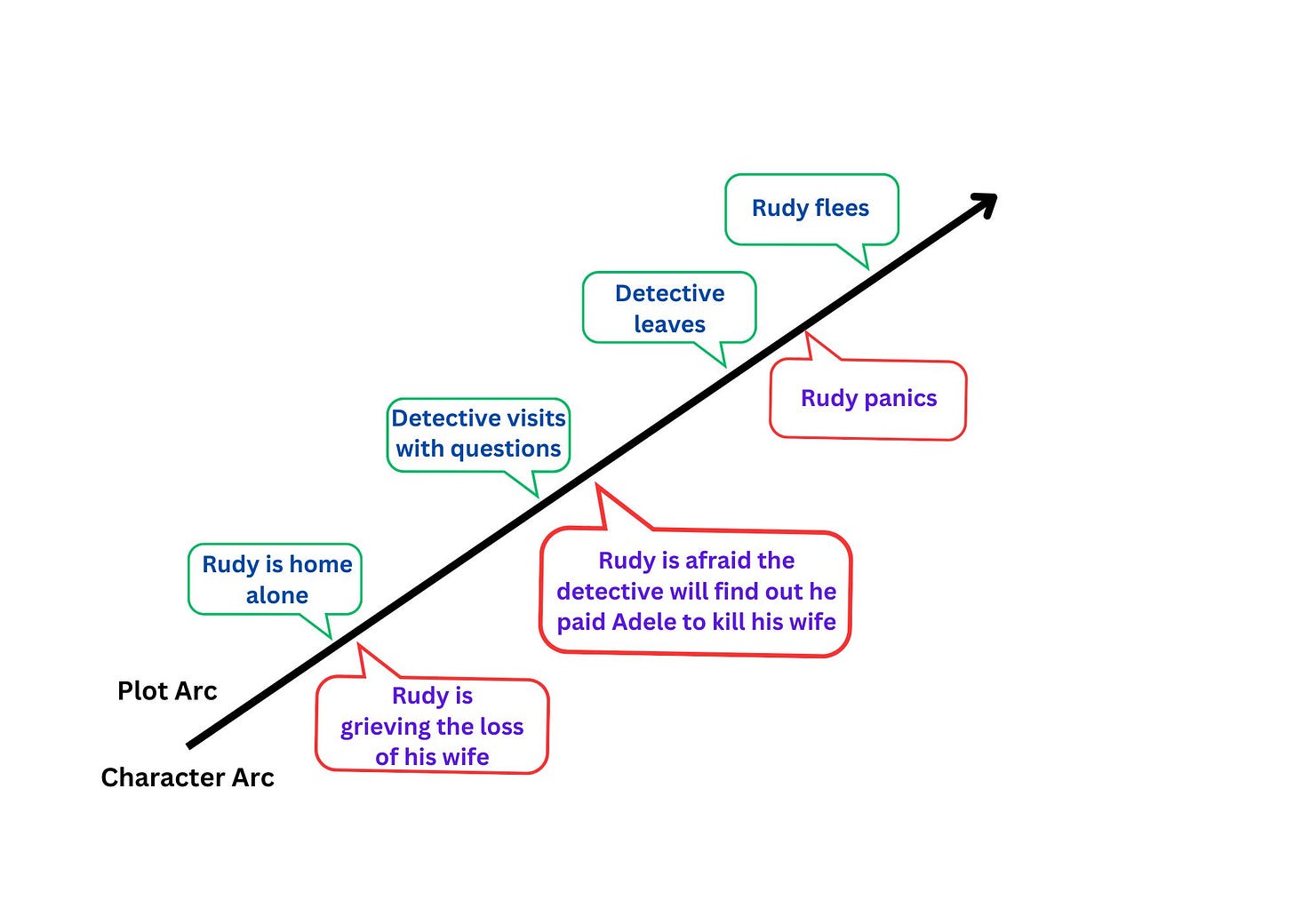
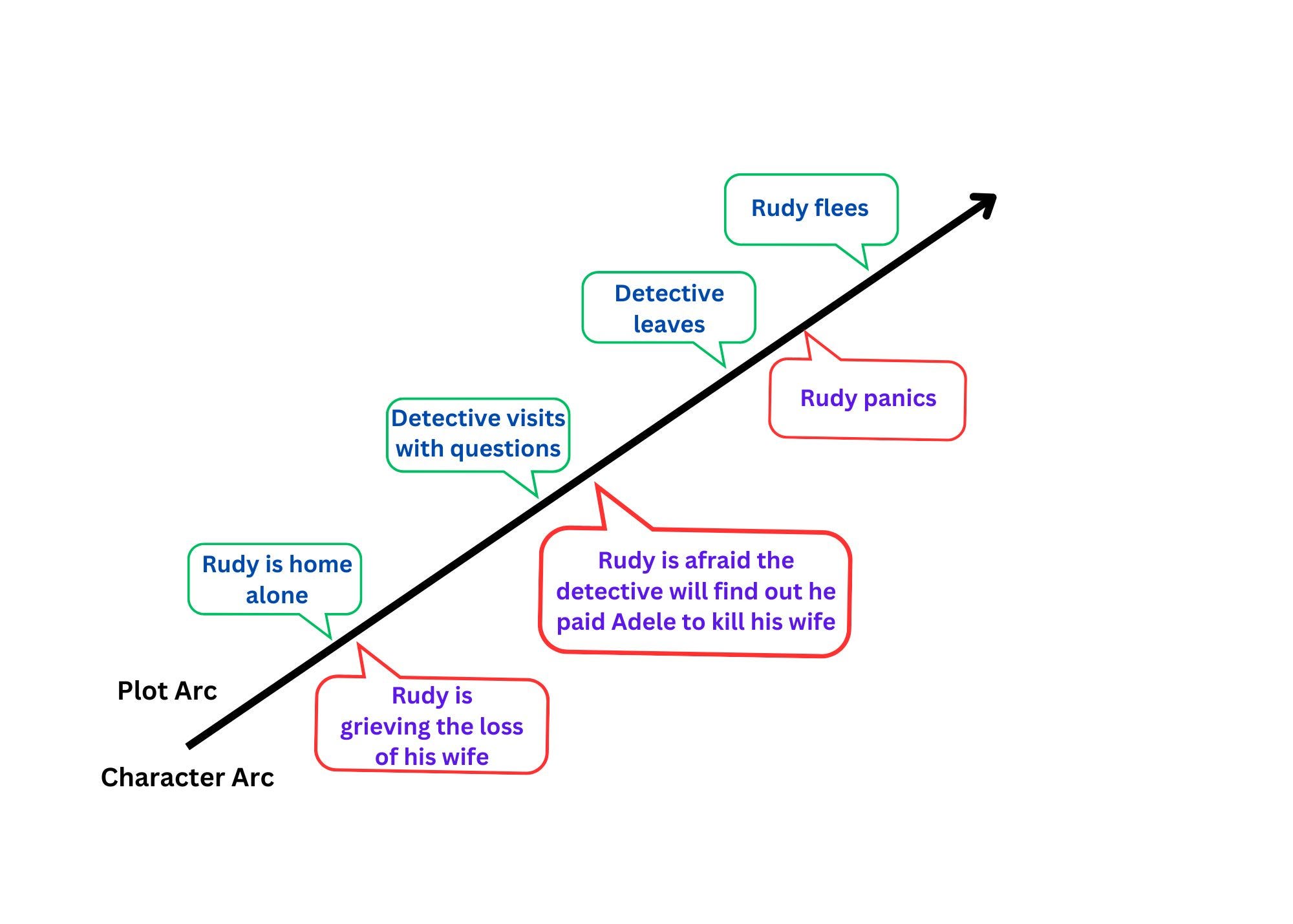
I created a visual to diagram my plot and character arcs—to make sure they moved in sync. The easiest way is to just draw a line on a piece of paper, write the plot points on top of the line and the character arcs (emotion) on the bottom. Like this:
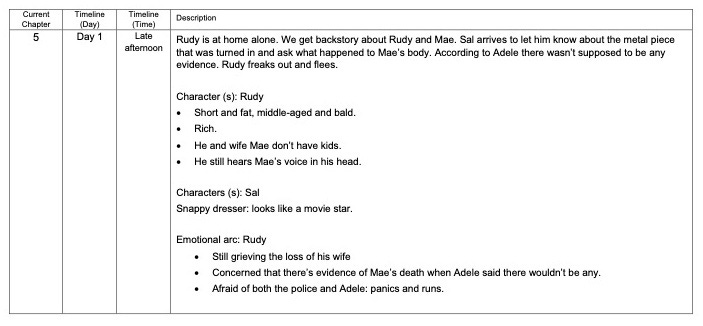
I used an enhanced timeline to capture both plot and character arcs3. For each chapter (or scene), I summarize the plot details, the characters who are involved (POV character first) and the character’s emotional arc.
If I can’t quickly write a short sentence about why my character is doing what they’re doing, I know I need to dig deeper.
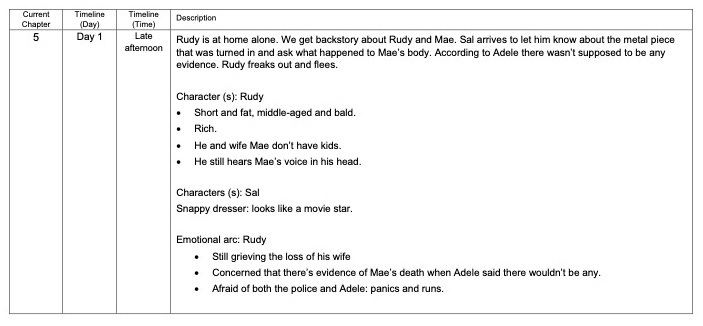
This timeline has been fabulous for figuring out where to put twists, cliff-hangers, rearranging the order of events in my WIP and generally just managing the real estate on the page4. Example below.
.
I studied emotions. There’s no shortage of theories, so pick what resonates for you. Two resources that helped me, The Emotion Thesaurus book by Angela Ackerman & Becca Puglisi. Also, research on what’s called an “emotional episode timeline”.5 A bit more on that.
Your character is going to be in some sort of state before an event6 triggers an emotion. Are they bored, hungry, maybe tired? Their state (whatever it is) will influence what happens next when …
They encounter a trigger. Remember that characters can be hard-wired by a prior experience, an affliction or other obstacle, or what they want (or need). This will influence their response when they feel …
An emotion. The character will experience physiological as well as psychological changes when this happens. Like what? Adrenalin stippled the back of my hands … the threat sharpened her … the sadness was blinding … a bubble of panic rose in his throat. To avoid cliches, I jot down phrases7 I overhear IRL or on TV, or stuff I read, that evoke a response. When I get stuck, I review these notes to spark ideas.
Writers, if you’re inclined to share, I’d love to know what works for you. ~ J. 🤔
As a writer, that book made me cringe. As a reader, I couldn’t put it down.
Peter Swanson’s The Kind Worth Killing. SO good.
I’m a panster, not a plotter and this worked for me.
I’ve heard that Scrivener makes this easy but I don’t use it.
Drs. Paul and Eve Ekman, Atlas of Emotions
Or, a person, situation, thought, memory, one of the five sense, an image ...
I use Notes on my iPhone.
This is great! Thanks for sharing!
love this!